


It’s easy to overlook just how much we hold in the face. From the moment we wake to the time we finally switch off at night, the jaw, temples, forehead and scalp are constantly at work – responding to thoughts, emotions, screens, and the pace of everyday life.
Over time, this quiet holding can build into a feeling of tightness or heaviness. You might notice it when your jaw feels clenched without realising, or when your forehead carries a subtle sense of strain. It’s rarely something we consciously choose – but it’s something many people experience.
The good news is that with the right kind of attention, this tension can begin to soften. Not through force, but through a slower, more intentional approach.
Much of the tension in the face forms gradually. Small, repeated habits – like concentrating, scrolling, or even reacting emotionally – can create patterns of holding over time.
The jaw, in particular, is one of the most common areas where this shows up. It’s closely linked to how we process stress, often tightening without us being aware. Similarly, the muscles around the eyes and forehead can become subtly engaged throughout the day, especially when focusing on screens or managing busy environments.
The face is deeply connected to how we express and experience emotions. Even when we’re not speaking, it reflects what’s happening internally.
This means feelings like stress, overwhelm, or even deep concentration can quietly settle into the muscles. Over time, these patterns can become familiar – almost like the face forgets how to fully relax.
The face contains a dense network of muscles, many of which are used continuously. Unlike other parts of the body, it rarely gets complete rest.
From subtle expressions to everyday communication, these muscles are always engaged in some way. Without moments of conscious release, they can remain in a state of low-level tension.
Facial tension rarely exists in isolation. It often links with the neck, shoulders, and scalp – areas that also carry the effects of posture, movement, and daily rhythm.
This is why a more holistic approach, one that includes surrounding areas rather than focusing on the face alone, can feel particularly grounding.

Rather than trying to “fix” tension, a gentle facial ritual works by creating space for the body to soften naturally.
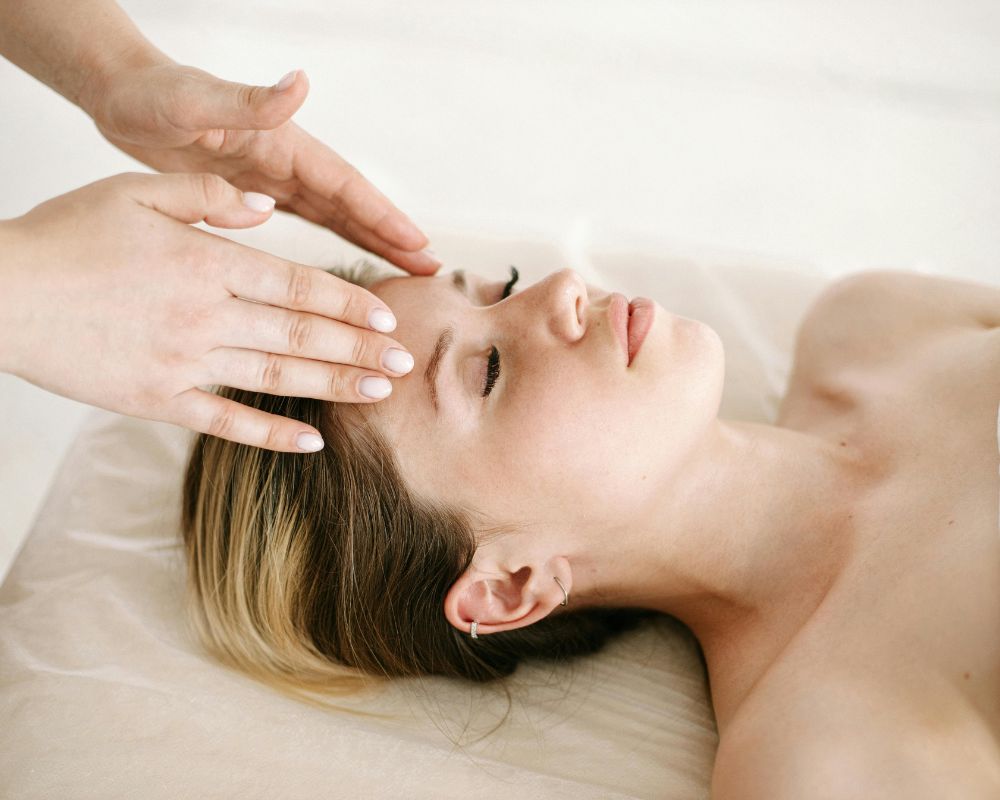
Slow, considered touch encourages awareness in areas that are often overlooked. As attention returns to the face, the muscles can begin to let go of holding patterns that have built up over time.
There’s no urgency in this process. It’s about allowing, rather than forcing.
One of the key elements of a facial release ritual is pace. Movements are unhurried, flowing, and mindful – designed to support a sense of calm rather than stimulation.
This slower rhythm can have a noticeable effect. As the body begins to settle, the face often follows, softening in response to the gentle, consistent pressure.
In everyday life, moments of stillness are rare. A ritual offers a dedicated pause – time where nothing is expected, and there’s no need to respond or react.
Each experience at Dragonfly Skin Day Spa is designed as a ritual rather than a treatment, encouraging a sense of pause and restoration.
Within this kind of environment, it becomes easier for the mind and body to unwind together. The face, often one of the last places we think to relax, can finally release its subtle tension.
Rather than a dramatic shift, the change is often gentle and gradual. The jaw may feel lighter, the forehead less held, and the overall sensation more balanced.
It’s less about a single moment and more about the overall feeling of ease that develops throughout the experience.
Because the ritual includes the neck and scalp, it often brings a broader sense of calm. These areas play a key role in how we carry tension, so including them helps create a more complete experience.
The result is not just a relaxed face, but a more settled overall feeling.
One of the quieter benefits of this kind of ritual is awareness. By bringing attention to areas we often ignore, it encourages a deeper connection with the body.
This awareness can carry beyond the experience itself – helping you notice when tension begins to return, and gently adjust.
In a world that moves quickly, it’s easy to stay in a constant state of doing. The face reflects that pace, often holding more than we realise.
Taking time for a slower, more intentional experience allows for something different – a chance to step out of that rhythm, even briefly.
At Dragonfly Skin Day Spa, the focus is not on changing or correcting, but on creating an environment where the body can settle in its own way. The Jaw & Facial Release Ritual is a simple yet thoughtful example of this approach – offering a calm, nurturing experience centred on softness and ease.
Facial tension doesn’t appear overnight, and it doesn’t need to disappear instantly either. Sometimes, the most effective approach is also the simplest: slow down, bring awareness back to the body, and allow space for release to happen naturally.
A gentle ritual creates that space. And in doing so, it offers something many of us don’t realise we need – a quiet return to ease.
EXCELLENT Based on 439 reviews
 Posted on Google
 Ruby RoundingWe had such a lovely experience at the spa recently and wanted to say a huge thank you to the whole team. I had a facial, which was absolutely wonderful and so relaxing, while my husband enjoyed a back massage. We both left feeling refreshed, relaxed and very well looked after. The staff were so welcoming and professional, and we would definitely recommend the spa to anyone looking for some time to unwind and be pampered. We also want to say a massive thank you for supporting Chasing Rainbows Baby Loss Charity by kindly donating raffle and prize contributions for our Baby Loss Charity Ball, which is being held during Baby Loss Awareness Week on Saturday 10th October. Your generosity and support mean so much to us. Every donation helps us continue our work supporting women and families through the devastating experience of baby loss. We genuinely appreciate you taking the time to support our charity and help make our event possible. Thank you again for your kindness, generosity and for helping us make a difference.Posted on Google
 MoudhiAbsolutely loved my experience at Dragonfly Spa! My friend took me and we both had such a lovely time everyone was so welcoming, the place smells amazing, and what stood out the most was how clean and hygienic everything was. It’s rare to find somewhere in Leeds with such great service and such high standards Lora did my massage and she was amazing, and everyone at reception was so lovely and welcoming too. Highly recommend and I’ll definitely be coming back to try more of their services! 🤍Posted on Google
 NWow!!! Nerila made me feel like I have a new body 😭 i absolutely feel amazing I was in so much pain and had so much tension. I am absolutely speechless I will be coming back again 100%😍Posted on Google
 Nerissa PortonovaDhruv, as a massage therapist is exceptional. I was pleased with his professionalism and politeness, Dhruv. Keep it up. NerissaPosted on Google
 Amy MilnerI went to Dhruv for a sports massage. I'm an 18 year old girl and he put me totally at ease. Brilliant massage, made me feel like I was floating on air!Posted on Google
 HappyGay DadLoved Tatiana and DhruvPosted on Google
 James MillsI experienced the Flotation treatment, from the moment I entered the spa the service was of the highest level. The decor is wonderful and the attention to detail is unmatched. The flotation treatment was carefully explained to me to enable me to have the best experience. I came completely relaxed and rejuvenated and there was even a pot of tea and brownie waiting for me in the chill out area. Must recommend for anyone 10/10, cant wait to go again!Posted on Google
 GholamDhruv was excellent very professional and knew what he was doingPosted on Google
 Radha KapuriaExcellent massage experience with Nerissa. My husband also had a great experience with Dhruv. Highly recommended!
Input your search keywords and press Enter.